Content

Greenland
Jan 24, 2026
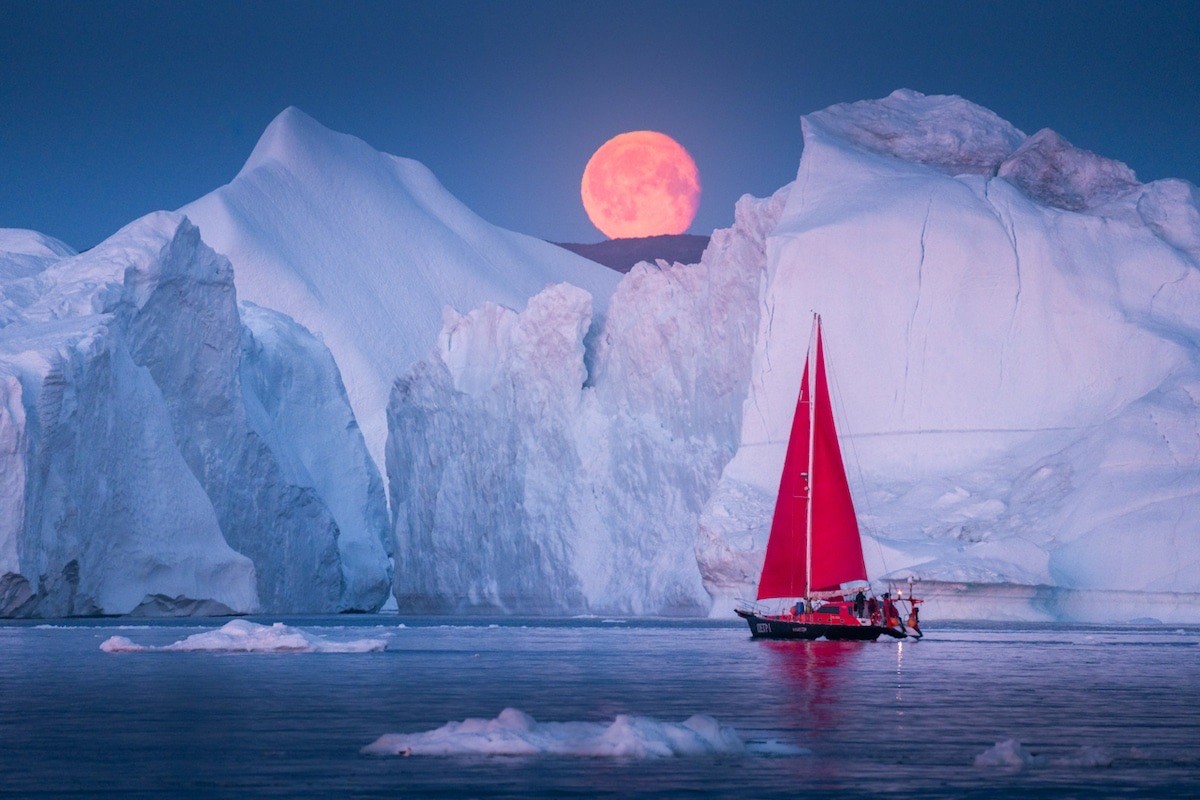
Greenland has been my favorite country for over 8 years now.
I still remember the moment. I was doom-scrolling online when I came across a photograph of an icy landscape dotted with houses painted in every color of the rainbow. It felt unreal—like something straight out of a Disney movie.
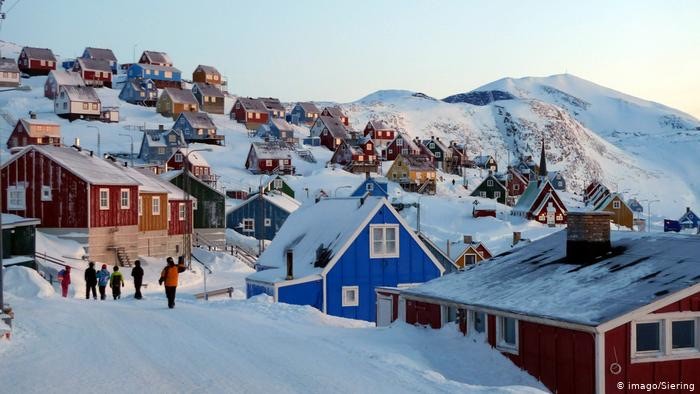
Looks fake—right??
Upon reading the photo’s caption, I learned it had been taken in Greenland—specifically in the city of Nuuk. Within seconds, I fell down a rabbit hole. I needed to know everything.
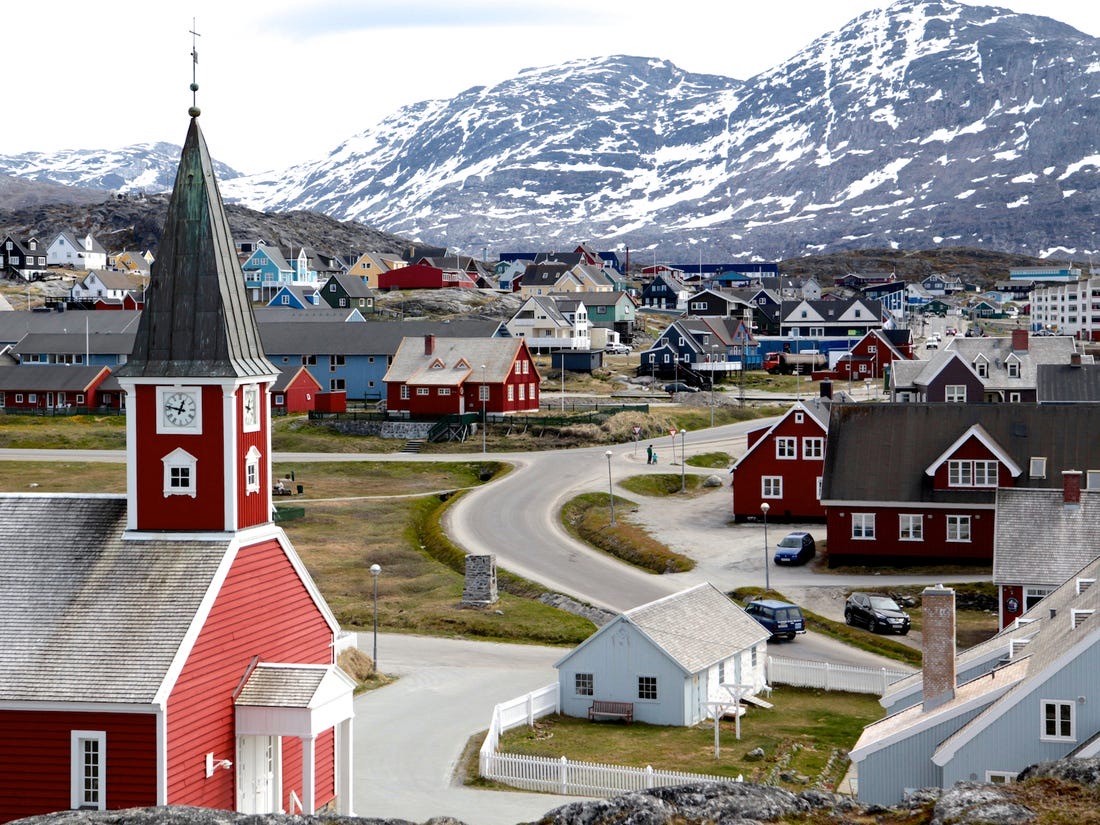
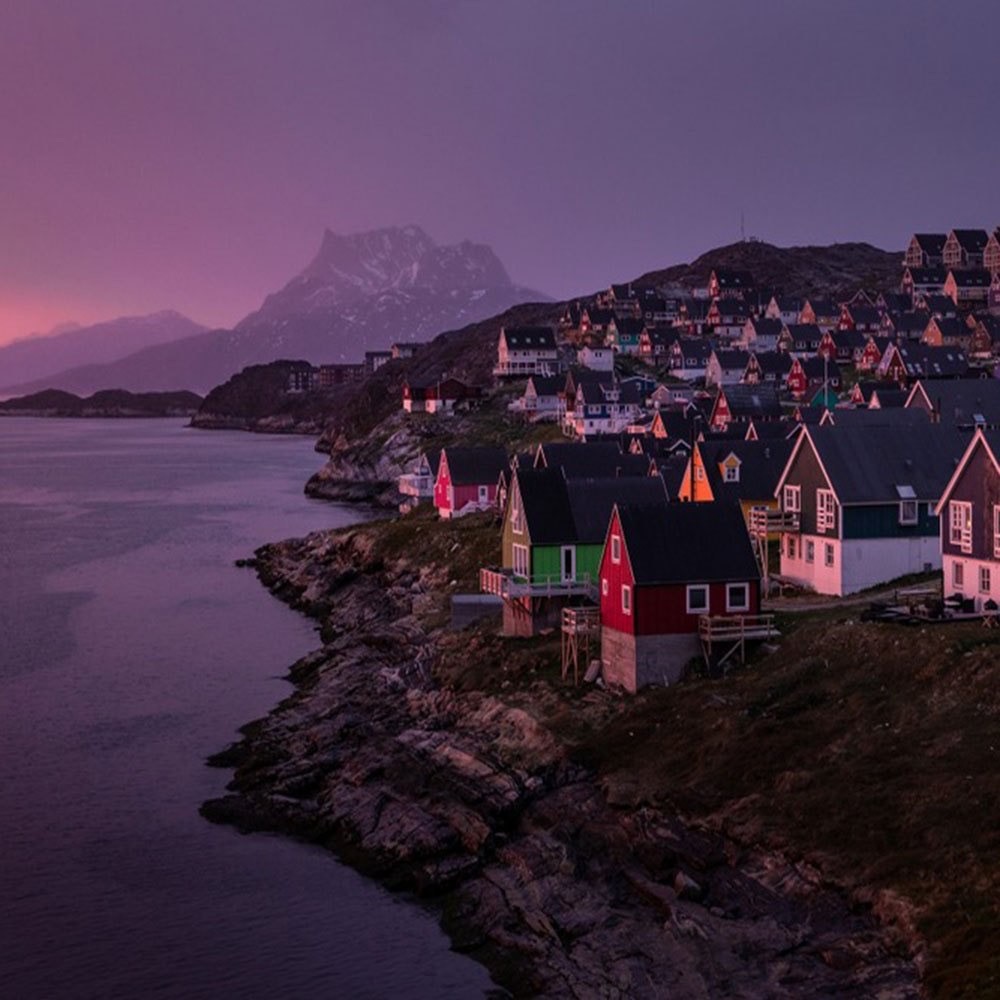
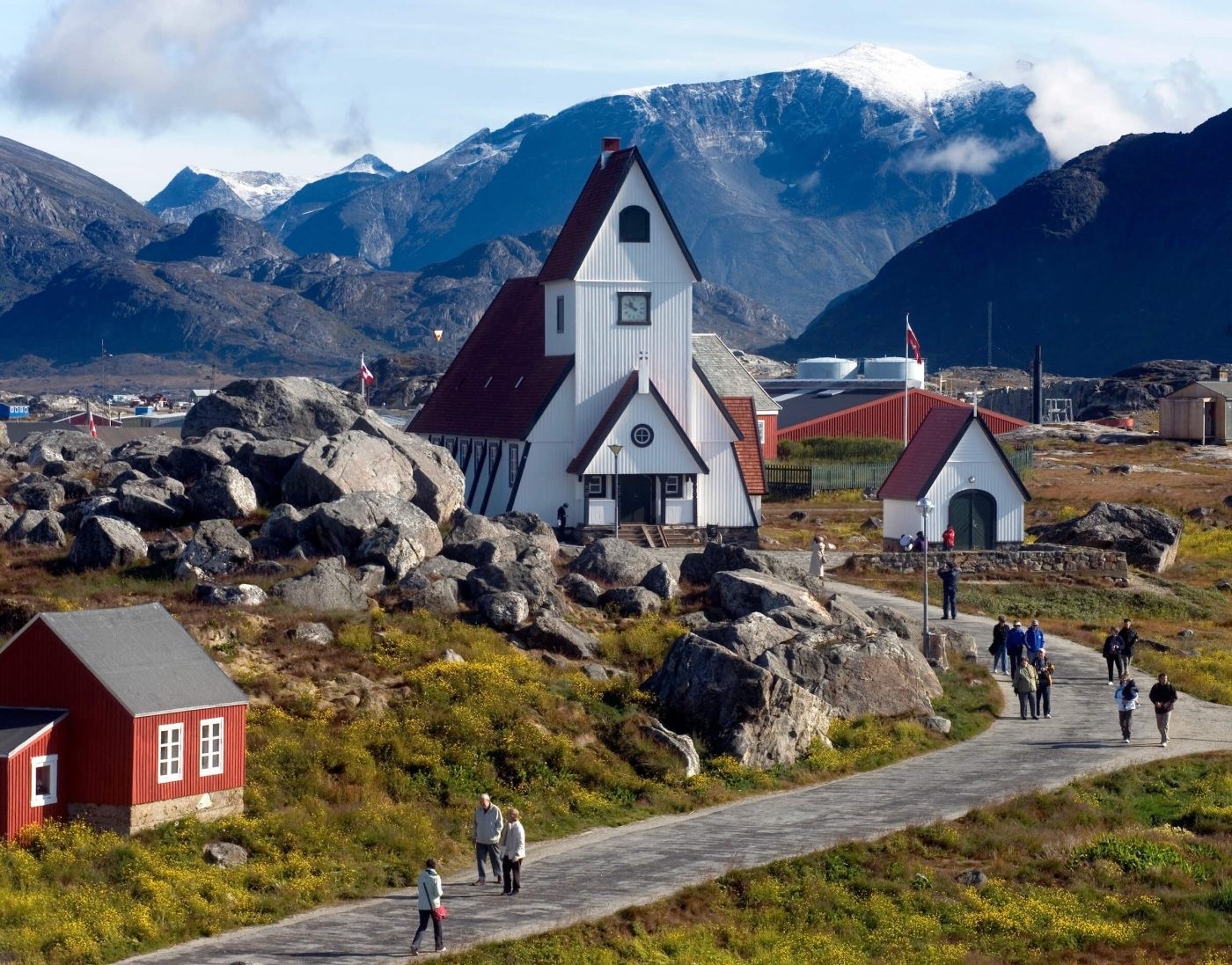
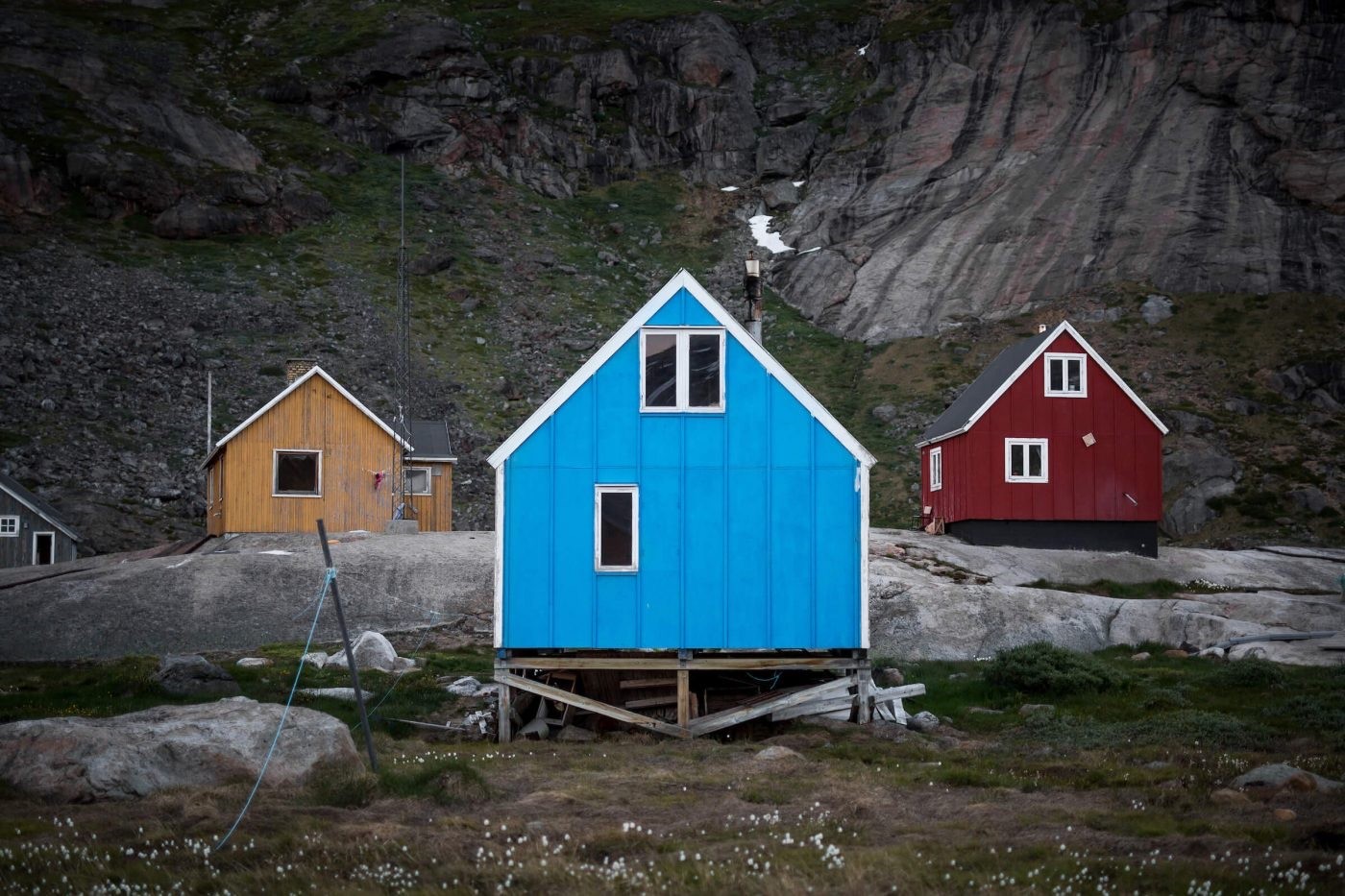
My first question that I needed answered was—why are all the house so colorful?
The answer dates back to Greenland’s Danish colonial era in the 18th century. Wooden prefab houses were shipped from Denmark as kits and assembled on the land. At the time, many Greenlanders could not read, and there were no street names or house numbers. To distinguish one building from another—and to identify each building’s function—the houses were color-coded.
This code was:
Red: The most common color, was used for churches, schools, shops/commercial buildings, and the houses of teachers, priests and shop owners.
Yellow: Hospitals, clinics, and living quarters for doctors or nurses.
Green: Telecommunications, radio, and utilities.
Blue: Factories, fish plants.
Black: Police stations and other official buildings.
Over time, this system became less practical and the tradition gradually faded. Today, residents must still follow guidelines and receive approval before painting their homes, but the palette has expanded far beyond the original five colors. Purples, pinks, and oranges now dot the landscape—adding warmth, personality, and cheer to the vast whiteness of the land and the long, dark days.
My second question I had—how cold does it actually get there?
I hadn’t anticipated that the country could get as warm as it does during the summer months. Depending on the location, temperatures can range from 32 to 68 degrees Fahrenheit, typically between June and August. Winter, however, is far less inviting. Between November and December, temperatures may reach as high as 23 degrees Fahrenheit before plunging to as low as −93 degrees—though not usually in the coastal towns.
In my state of naivety, I had assumed Greenland lived in the negatives year-round. But check this—they can even play soccer. Not only that, they have some of the sickest soccer fields I’ve ever seen, set right up again the icebergs.
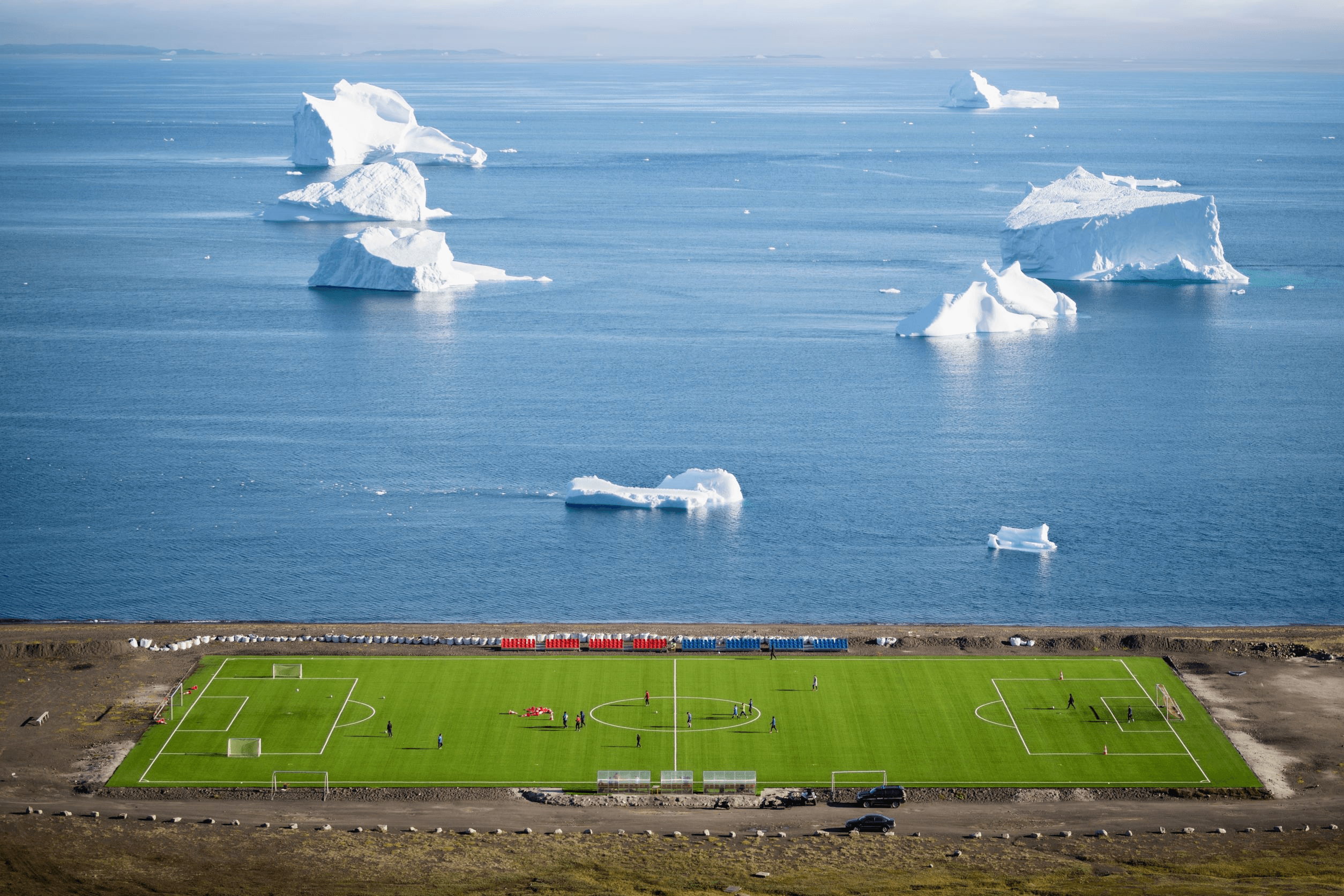
Quickly to touch upon the history of football (soccer) in Greenland (because it's interesting)—I found this article on CNN discussing the countries soccer season.
https://www.cnn.com/2017/08/18/football/greenland-the-worlds-shortest-football-season
Greenland is the only country in the world with soccer fields located above the Arctic Circle—and getting actual fields built was a long, hard brawl. Before the installation of the country’s eleven artificial turf fields, athletes played on hard sand pitches, where injuries were constant and everyone would be breakin bones.
Greenland also has the shortest soccer season of any country, lasting just one week each year. With snow covering the land for nearly nine months, opportunities to play are v limited Despite this, soccer remains the most popular sport in the country, with over 5,500 registered players—nearly 10 percent of the population!!
I could go on and on about this topic alone, but moving forward…
Third question I had—how did people end up there?
A few years ago, I read a book called Ice at the End of the World by Jon Gertner. In the first chapter, you’re introduced to an adventurous—and murder-convicted—Viking named Erik Thorvaldsson, better known as Erik the Red.
He was born way back around the year 950 in Rogaland, Norway. When he was just ten years old, he and his family crossed the sea to Iceland, landing on its northernmost peninsula, Hornstrandir. Eventually, Erik married and had four children—one of them being Leif Erikson!
In the year 985, he got banished from Iceland for three years for murder. In that tim,e he set off on a big ole exploration to find this mysterious land that another viking by the name of Snæbjörn galti Hólmsteinsson (no clue how to pronounce it) had failed at. He landed in the southernmost tip of the land and slowly made his way up the west coast till he found a landscape that was similar to that of Iceland.
For those next three years, he spent his time exploring the island until he was able to return back to Iceland. Once he got back, he shared his discovery with everyone of a lush land with potential for settlement. He gave Greenland it's name to lure people in, and it worked. Twenty five ships carrying over 700 people left Iceland and set off to start a new beigining.
Now, this is the general story for the discovery of Greenland but, there actually was civilization there wayyyyyy before the Norse. It is believed that the first human to have lived on the land, dates back to 2500 BC!
Fourth Question—why does noone talk about it?
This isn’t entirely accurate today, buttt it was in the past. Just a few reasons:
For one, Greenland is extremely remote and sparsely populated. Only 20% of the land is actually habitable and not covered by permanent ice sheets. It also isn’t a high-demand vacation destination for the average traveler, so year-round flights are typically only available from Iceland and Denmark. At times, Canada and the United States also offer flights.
Greenland is an autonomous territory within the Kingdom of Denmark, which means it rarely generates major, politically driven headlines (with some exceptions in recent years).
And lastly, more than 80% of Greenland’s population is Inuit, and historically, Indigenous communities have often been overlooked or ignored in global media and discourse.
It's a special place.
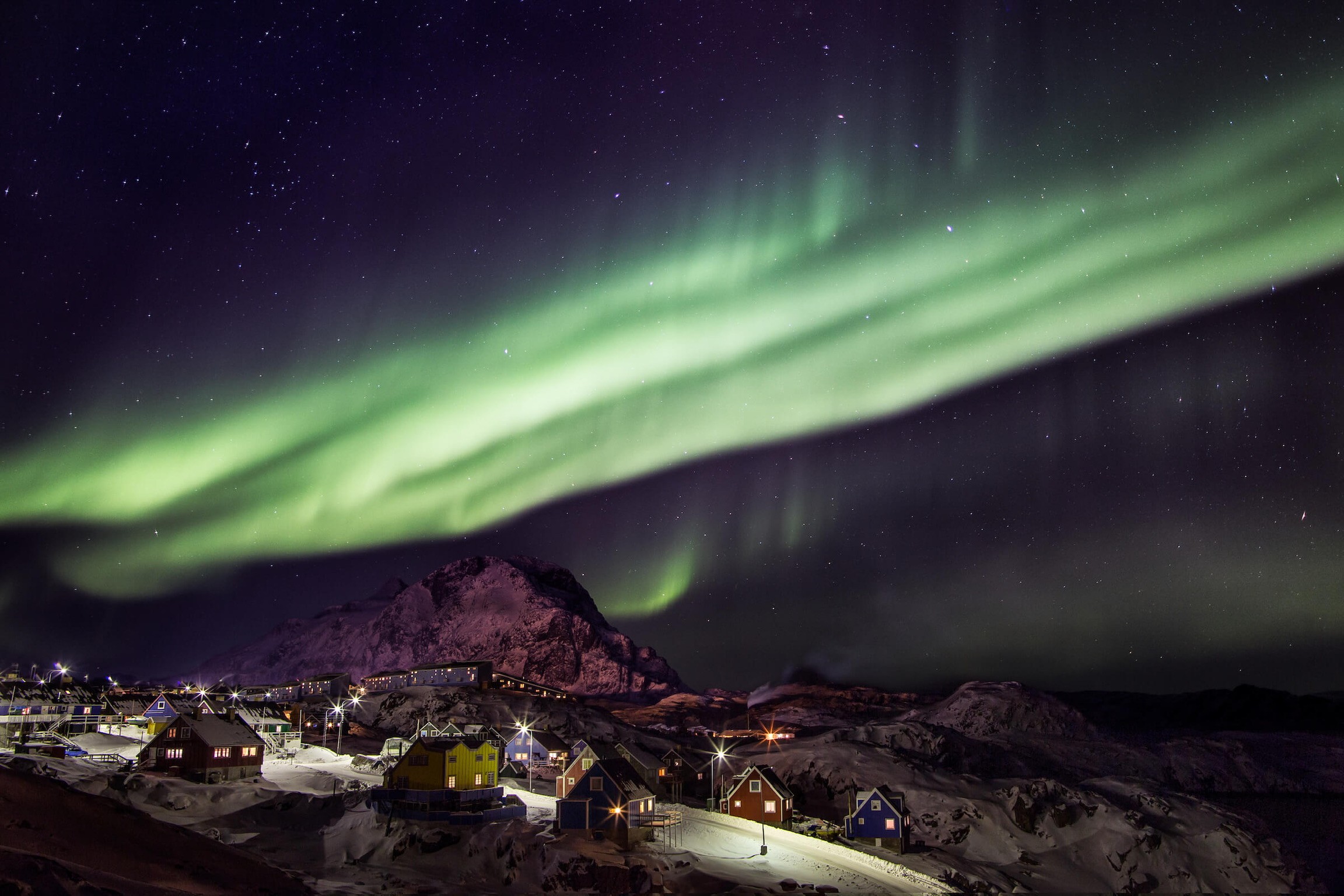
Learning about the country's history, culture, and lifestyle over the years has made me love and appreciate it more. For now, I admire it from afar, dreaming of the day I’ll stand beneath its northern stars.
Resources
Gertner, Jon. Ice at the End of the World.
Greenland Official Tourism Site: https://greenland.info/
Visit Greenland — History of Greenland: https://visitgreenland.com/activities/history-of-greenland/
Visit Greenland — Erik the Red: https://visitgreenland.com/articles/erik-the-red/
Visit Greenland — Architecture: https://visitgreenland.com/activities/architecture/
Wikipedia — Greenlandic Inuit: https://en.wikipedia.org/wiki/Greenlandic_Inuit
BBC News — Greenland: https://www.bbc.com/news/world-europe-18249474
CNN News — Football in Greenland: https://www.cnn.com/2017/08/18/football/greenland-the-worlds-shortest-football-season
Denmark — Peal and Culture: https://denmark.dk/people-and-culture/greenland